Money in Busan:
card-first, cash where it counts
Korea is card-first until the moment you're hungry. Foreign cards work at convenience stores, chains, hotels and taxis, and routinely fail at traditional markets and street stalls — exactly where Busan's food is. Carry ₩50,000–100,000 in cash for a sightseeing day, double that for a serious market crawl. Tap-to-pay barely exists; don't plan around it. Load a transit card with cash too — the metro's own kiosks are one of the places foreign cards fail.
Where your foreign card works — and where it dies
The splitThe pattern is consistent enough to plan around: the more traditional the venue, the more likely it's cash.
| Where | Foreign card? | The reality |
|---|---|---|
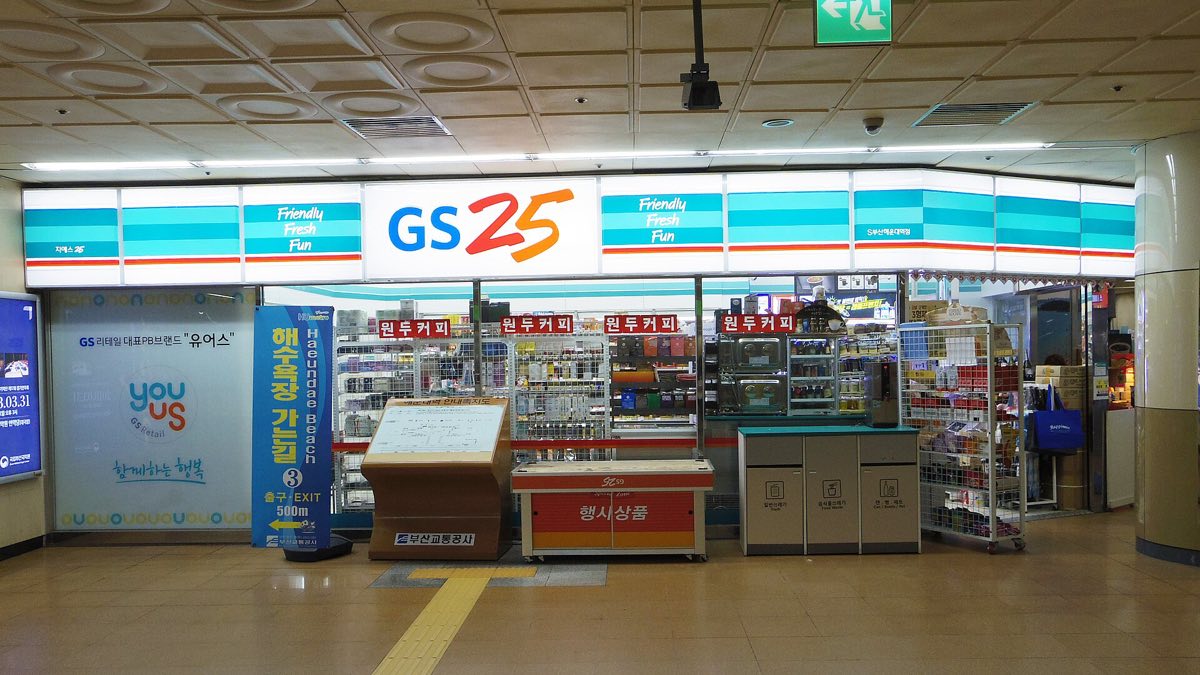
| Convenience stores | Yes | GS25, CU and 7-Eleven take everything, around the clock |
| Chains, hotels, department stores | Yes | Frictionless — including Shinsegae and the coffee chains |
| Taxis | Yes | Meters take cards; this is one place Korea makes it easy |
| Traditional markets | No | Jagalchi, Gukje, Bupyeong, Haeundae Market — cash, full stop |
| Street stalls & small restaurants | Mostly no | Exactly where Busan's best eating lives — carry won |
| Metro ticket kiosks | No | Assume foreign cards fail — load a transit card with cash instead |
The cruel joke of the split: the better the food, the less likely the card reader. A market crawl through Jagalchi or a gukbap lunch runs on cash — budget double your normal daily won for market days.
T-money vs Cashbee vs WOWPASS
The card questionAll three ride the Busan Metro. The differences are where you get one and what else it does.
| T-money | Cashbee | WOWPASS | |
|---|---|---|---|
| What it is | Korea's default transit card, Seoul-origin | The Busan/Lotte-family transit card | Exchange machine + prepaid card + transit card in one |
| Busan Metro & buses | Yes — works nationwide | Yes — the hometown card | Yes — has T-money function built in |
| Where to get it | Any convenience store | Convenience stores, strong in Busan | Airport and city kiosks, incl. Gimhae |
| Reload with | Cash | Cash | Cash — or foreign banknotes at its exchange kiosks |
| The extra | Works in every Korean city you'll visit | Local discounts at Lotte-family outlets | Doubles as a spending card where cards are accepted |
Already carrying a T-money from Seoul? It works fine in Busan — don't buy anything new. Starting fresh at the airport, WOWPASS solves exchange and transit in one stop: the Gimhae arrival guide shows the kiosks.
What a Busan day costs, in both currencies
Daily numbersVerified anchors, per person. Dollar prices convert at ₩1,430 = $1, the rate on 6 August 2026. Treat every converted figure as close, not exact — the won moved 8% in the last two months alone.
| Line | ₩ | ~$ |
|---|---|---|
| Food day, market-led | ₩25,000–40,000 | $17–28 |
| Food day, comfortable (one proper dinner) | ₩60,000–100,000 | $42–70 |
| Casual single meal | ₩10,000 | $7 |
| Metro ride (transit card) | about ₩1,600–1,800 | $1.10–1.25 |
| Taxi flagfall | ₩4,800 | $3.40 |
| Beer out ₩5,000 · CVS soju ₩1,500–2,000 | — | $3.50 · $1–1.40 |
| Cash to carry, sightseeing day | ₩50,000–100,000 | $35–70 |
Metro fares are our best estimate — verify at humetro.busan.kr. Want the whole trip computed against your own style? The plan hub's calculator does the stack live.
Busan vs Seoul money: two cheaper, two dearer
The comparison everyone asksBusan is the cheaper city overall, but not uniformly, and the two exceptions are genuinely counter-intuitive. Cheaper in Busan: restaurants (Seoul runs about 23.8% dearer) and above all rent (Seoul about 71.7% higher — the gap that makes a Busan long stay pencil out). Dearer in Busan: groceries, up about 7.4% on Seoul, and the monthly transit pass — ₩80,000 against Seoul's ₩63,500, a 26% premium nobody expects from the smaller city.
Two more habits to recalibrate: tap-to-pay exists in only around 10% of stores and Apple Pay support is limited, so the physical card and cash do the work. And the ₩5,000-per-person 상차림비 table charge at raw-fish restaurants isn't a scam, it's the setting fee — it just surprises people who didn't read the Jagalchi page first.
Two boring purchases that save the trip
Money adjacentNeither is glamorous. Both are the difference between a hiccup and a ruined day.
Busan money questions, answered
FAQPage schema pairedIs Busan cheaper than Seoul?
Mostly yes, with two exceptions worth knowing. Restaurants run about 23.8% dearer in Seoul and rent about 71.7% dearer — but groceries are about 7.4% more expensive in Busan, and the ₩80,000 monthly transit pass costs 26% more than Seoul's ₩63,500. Eat out, ride single fares, and Busan wins clearly.
How much cash should I carry in Busan?
₩50,000–100,000 (~$35–70) per person for a sightseeing day, and double that for a serious market day — Jagalchi, Gukje and the street-food alleys are cash territory. Convenience stores take cards, so cash is for eating, not everything.
Can I use my credit card in Busan?
At convenience stores, chains, hotels, department stores and taxis — reliably yes. At traditional markets, street stalls, small restaurants and metro ticket kiosks — assume no. The split is stable enough to budget around: cards for the city, ₩50,000+ cash for the food.
Does Apple Pay or tap-to-pay work in Korea?
Barely — NFC terminals sit in only around 10% of stores and Apple Pay support is limited. Carry the physical card and don't build any plan on your phone paying for things.
What is WOWPASS?
A kiosk-issued card that changes foreign cash, works as a prepaid spending card, and carries T-money transit function — one purchase at an airport or city kiosk covers all 3 jobs. Like every Korean transit card, the transit balance reloads with cash — ₩10,000 gets you rolling.
Do you tip in Busan?
No — tipping simply isn't done in Korea: not in taxis, not in restaurants, not at hotels. The bill is the bill, service included, ₩0 on top. The only extra you'll meet is the ~₩5,000 table charge at raw-fish restaurants, which is a menu item, not a tip.
Can I pay the metro with my contactless bank card?
Assume no — unlike London-style open-loop systems, Busan's gates want a Korean transit card. Load a T-money, Cashbee or WOWPASS with cash and rides cost about ₩1,600–1,800; full details at getting around Busan.