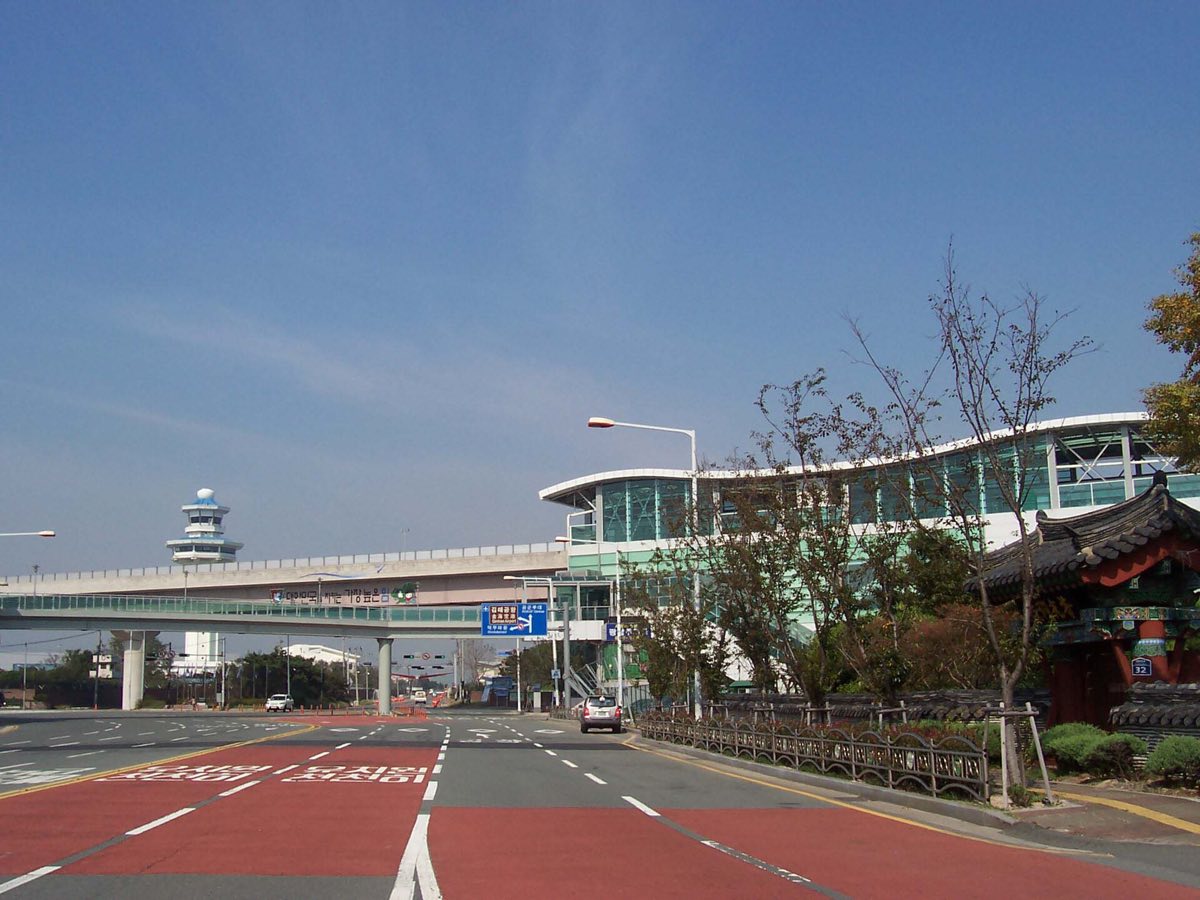
Gimhae Airport to the city:
every route, priced
Gimhae (PUS) sits west of the city; the beaches you're probably staying on sit east — so every arrival crosses town. By day, the Busan–Gimhae light rail to Sasang then Line 2 is cheap and immune to traffic: about 70 minutes to Haeundae, around 40–45 to Seomyeon. Taxis run 40–55 minutes to the beaches for very roughly ₩35,000–45,000 (~$24–31) on the meter. After the trains wind down for the night, the taxi rank and the pre-booked transfer are the whole menu.
Airport to your bed, every base
By destinationRail times are rounded door-to-door estimates; taxi fares are rough meter arithmetic from the ₩4,800 flagfall plus about ₩1,000/km — treat every won figure as approximate, with tolls and night running extra.
| Staying in | By rail | Rail time | Taxi time | Approx taxi fare |
|---|---|---|---|---|
| Haeundae | LRT → Sasang, Line 2 east to the end | ~70 min | 45–55 min | ~₩35,000–45,000 (~$24–31) |
| Gwangalli | LRT → Sasang, Line 2 to Gwangan | ~60–65 min | 40–50 min | ~₩30,000–40,000 (~$21–28) |
| Seomyeon | LRT → Sasang, then Line 2 direct | ~40–45 min | 30–40 min | ~₩20,000–28,000 (~$14–20) |
| Nampo | LRT → Sasang, Line 2 to Seomyeon, Line 1 south | ~55–60 min | 35–45 min | ~₩20,000–30,000 (~$14–21) |
The rail route is the same trick every time: light rail to Sasang, step onto Line 2, and let the transfer at Seomyeon handle the west side. Rides cost about ₩1,600–1,800 per leg on a transit card — and the airport is where WOWPASS kiosks solve cash and card in one stop.
Gimhae is the airport for this decade — plan accordingly
The decade aheadYou may have read about Gadeokdo, Busan's huge new island airport. It has slipped to 2035 — so for every trip you're planning off this page, compact, close-in Gimhae is it. That's mostly good news: PUS is small enough to walk out of quickly, the light rail connects directly, and the city starts 20-odd minutes away rather than an expressway hour like Incheon from Seoul.
Flying in from Seoul instead of taking the train? Run the numbers at Seoul to Busan first — once you add both airport transfers, the KTX's 2h35m city-centre-to-city-centre usually wins the day.
The late-night reality
After darkTrains stop running around 23:00 or so — verify current last-train times at humetro.busan.kr rather than trusting a blog, ours included. Land after that and your options are the official taxi rank (fine, metered, night surcharges apply) or a transfer booked before you flew, which turns a midnight arrival from a negotiation into a name board. With data on your phone from landing, either is painless; without it, the booked transfer is the one that doesn't need you online at the kerb.
One planning nudge: on a late arrival, consider sleeping your first night in Seomyeon — it's the closest of the four bases (30–40 minutes by taxi, roughly ₩20,000–28,000) and repositioning to a beach the next morning costs one easy Line 2 ride.
Transfers, compared before you fly
Book the pickupThree ways to have the car problem already solved when you land.
The practical bit
At a glanceGimhae arrival questions, answered
FAQPage schema pairedHow do I get from Gimhae Airport to Haeundae?
Light rail to Sasang, then Line 2 east to the end — about 70 minutes door-to-door and immune to bridge traffic. A taxi runs 45–55 minutes at very roughly ₩35,000–45,000 (~$24–31) on the meter, and earns its fare with luggage or a group of 3–4.
How much is a taxi from Gimhae Airport?
Rough meter arithmetic from the ₩4,800 flagfall plus about ₩1,000/km: around ₩20,000–28,000 to Seomyeon, ₩20,000–30,000 to Nampo, ₩30,000–45,000 to the beaches — all approximate, with tolls and night surcharges extra. Every figure is a band, not a promise.
Is there a train from Busan's airport to the city?
Yes — the Busan–Gimhae light rail, which meets Line 2 at Sasang, and from there the metro reaches every base on this site. Budget about ₩1,600–1,800 per leg on a transit card and let getting around Busan handle the rest of the trip.
What if I land after midnight?
Rail will be finished — last trains run around 23:00, worth verifying at humetro.busan.kr — so it's the official taxi rank or a transfer booked before departure. Consider a first night in Seomyeon, the closest base at 30–40 taxi minutes, and reposition in the morning.
Isn't Busan getting a new airport?
Eventually — Gadeokdo has slipped to 2035, so no trip you're planning now will touch it. Gimhae, 20-odd minutes from the western districts, is the airport for this decade.
Can I get a transit card at the airport?
Yes — WOWPASS kiosks at Gimhae change foreign cash and issue a card with T-money transit function in one stop, and convenience stores in arrivals sell standard cards too. Load ₩10,000 or so and the whole metro system opens up.
How do I get from Gimhae Airport to Nampo?
By rail: light rail to Sasang, Line 2 to Seomyeon, then Line 1 south — about 55–60 minutes all in, at roughly ₩1,600–1,800 (~$1.10–1.25) per leg on a transit card. A taxi runs 35–45 minutes at very roughly ₩20,000–30,000 (~$14–21) on the meter, and with that transfer-heavy rail route it's the rare Busan case where the cab earns a look even travelling solo.
Should I fly from Seoul to Busan instead of taking the KTX?
Usually no: the KTX runs city centre to city centre in about 2h35m for ₩59,800 (~$42), while flying adds an airport transfer at both ends — including the ~70-minute rail leg from Gimhae if you're staying in Haeundae. Price the whole door-to-door chain, not the flight alone; the train's side of the ledger is at Seoul to Busan.