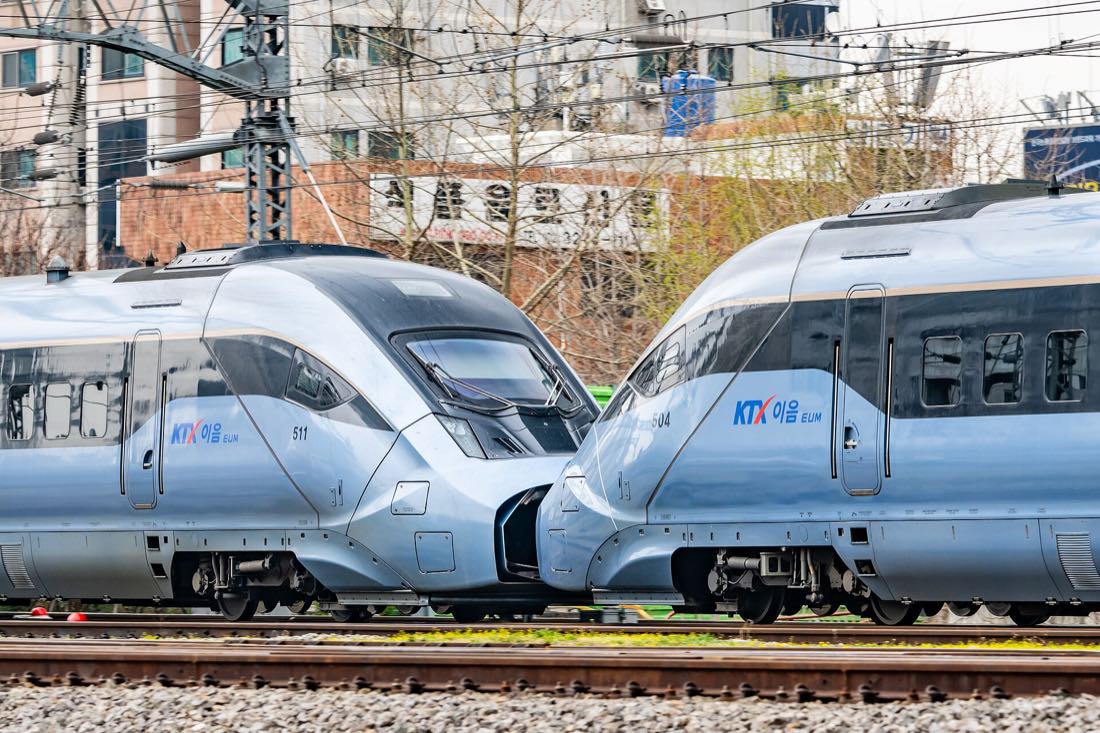
The Korail Pass:
do the arithmetic first
Here's the arithmetic every affiliate page skips: a Seoul–Busan KTX return costs ₩119,600 (~$84) as plain tickets, and the cheapest Korail Pass costs ₩131,000 (~$92). On the most common rail itinerary in Korea, the pass loses ₩11,400 (~$8). It's foreigners-only, it excludes the SRT and every city subway, and it earns its keep only when you ride three or more long legs inside its window. Do your own sum before anyone sells you one.
The sum nobody selling it shows you
The headline numbersTwo verified prices and one subtraction. That's the whole decision for most trips.
Korail Pass 2026, every version
2026 pricesAdult, youth (13–27) and child prices, verified August 2026. 'Select' versions let you pick non-consecutive travel days; 'Consecutive' runs on a fixed block.
| Pass | Adult | Youth 13–27 | Child |
|---|---|---|---|
| 2-Day Select | ₩131,000 (~$92) | ₩105,000 | ₩66,000 |
| 3-Day Consecutive | ₩165,000 (~$115) | ₩132,000 | ₩83,000 |
| 4-Day Select | ₩234,000 (~$164) | ₩187,000 | ₩117,000 |
| 5-Day Consecutive | ₩244,000 (~$171) | ₩195,000 | ₩122,000 |
Foreign passport holders only. Covers Korail trains including the KTX — but not the SRT and not any metro or subway ride. If your Busan leg is on the SRT from Suseo, the pass covers none of it: the Seoul–Busan booking guide explains that trap.
When the pass actually wins — and when it quietly loses
The honest casesThe pass is priced for people looping the country, not shuttling between its two biggest cities. Even doubling up doesn't save you: two Seoul–Busan returns cost ₩239,200 in plain tickets, and the 5-day pass is ₩244,000 — still ₩4,800 behind. The pass cannot beat point-to-point maths on any amount of Seoul–Busan shuttling.
Where it wins is the one-way loop: Seoul down one coast, across, and back up the other — three or more long KTX legs inside the pass window. The break-even is mechanical: price your actual legs on letskorail, add them up, and buy the pass only if the total beats the pass price. As a yardstick, the 3-day pass at ₩165,000 needs ₩45,400 (~$32) of rail on top of a Seoul–Busan return before it pays for itself — that's a genuine third leg, not a metro hop, and remember every subway and airport transfer stays out of pocket either way.
One more honest note: Busan's best add-on day, Gyeongju, is usually done by intercity bus or a guided tour rather than Korail — so it rarely helps the pass arithmetic either.
Buy it only after the maths says yes
If your route clearsWe just spent a page telling you when not to buy this. If your legs genuinely add past the pass price, here's where booking works with a foreign card.
Korail Pass questions, answered
FAQPage schema pairedIs the Korail Pass worth it?
Not for the standard Seoul + Busan trip: a KTX return is ₩119,600 and the cheapest pass is ₩131,000, so you'd pay ₩11,400 extra for the privilege. It wins only on multi-city loops with 3+ long-distance legs inside the pass window — add up your actual fares before buying.
Does the Korail Pass cover the SRT?
No. The SRT is a separate operator out of Suseo Station and sits entirely outside the pass — a detail that catches people who booked SRT because it looked a few thousand won cheaper. All 4 pass versions cover Korail services only, including the KTX from Seoul Station.
Does the Korail Pass cover the subway in Seoul or Busan?
No — no metro, no subway, no city buses, anywhere. Budget those separately: Busan Metro rides are about ₩1,600–1,800 on a transit card, and getting around Busan covers the card to load them on.
Who can buy the Korail Pass?
Foreign passport holders visiting Korea — residents can't. There are 4 versions (2-Day and 4-Day Select, 3-Day and 5-Day Consecutive) from ₩131,000 to ₩244,000, with youth and child tiers below that.
How much is the KTX to Busan without a pass?
₩59,800 (~$42) standard class each way, ₩83,700 (~$59) first class, no round-trip discount — so ₩119,600 return. That single number is why the pass fails for most people: how to book it with a foreign card.
When does the pass actually make sense?
Rough yardstick: the 3-day pass needs ₩45,400 of rail beyond a Seoul–Busan return to break even — a real third long leg, like continuing up the east coast, inside 3 consecutive days. Price every leg on letskorail, total them, and let the bigger number decide.
Can I buy the Korail Pass with a foreign credit card?
This is the pass's quietest real advantage: letskorail's checkout has a habit of rejecting foreign cards, while Klook processes international cards normally and sells both the pass and plain KTX tickets (100,000+ booked). Just don't let payment convenience decide the maths — the cheapest pass is ₩131,000 (~$92) against a ₩119,600 (~$84) Seoul–Busan return, and the card workarounds for single tickets live at Seoul to Busan.
Do the Korail Pass days have to be consecutive?
Only on two of the four versions: the 3-Day (₩165,000, ~$115) and 5-Day (₩244,000, ~$171) are Consecutive passes, while the 2-Day (₩131,000, ~$92) and 4-Day (₩234,000, ~$164) are Select — you choose which days you travel, and they don't have to touch. That flexibility is exactly what a multi-city loop wants, since a rest day between long legs stops burning pass value.